Jan 09, 2026
Large-scale waste generally refers to bulky items with high structural integrity. These are large, difficult-to-break items. They keep their shape under typical handling. Personnel must disassemble these items before further processing. Common examples include discarded household appliances and furniture. Their large volume and weight create logistical challenges during transportation and handling. Hazardous substances in some items, such as chemicals or heavy metals, pose risks to environmental quality and public health.
To manage large-scale waste, set up dedicated collection points and suitable waste containers. Use bins for metal or wood. Waste sources and uses differ. Waste may include residential furniture, such as sofas and tables, as well as industrial equipment, such as machinery and factory parts. The management process begins with a visual inspection. This is done by hand or with automated sensors to identify specific waste types and characteristics. Next, use weighing devices, such as scales, to determine mass. This helps with classification. Following this, conduct compositional analysis using laboratory methods. These may include spectroscopy or chemical assays. This enables precise categorization. For example, set up temporary storage areas in communities and add clear signage to guide disposal. Allow residents to schedule pickups with authorized providers. This initial assessment and setup smoothly transition the waste for pre-treatment.
Pre-treatment
The pre-treatment stage begins with feeding. Large-scale waste enters the processing line either by hand or with loading machinery. This ensures smooth entry to the next stages. Manual feeding works for smaller, lighter, and more regular-shaped items. Personnel move these items to the right spots. In contrast, mechanical loaders are needed for bulky and heavy waste. They accurately position materials at the inlet of the production line. This ensures a seamless start to processing. Once properly positioned, the waste is ready for disassembly.
Next, disassembly is performed. The nature of the waste determines whether manual, mechanical, or a combination of methods is used. Manual disassembly is flexible and precise, making it best for complex items needing careful handling, though it is labor-intensive and less efficient. Mechanical disassembly provides higher throughput and is suited for uniform, large-volume waste, but requires more advanced equipment. After disassembly, the materials proceed to the shredding stage, ensuring a consistent flow throughout the process.
Shredding stage
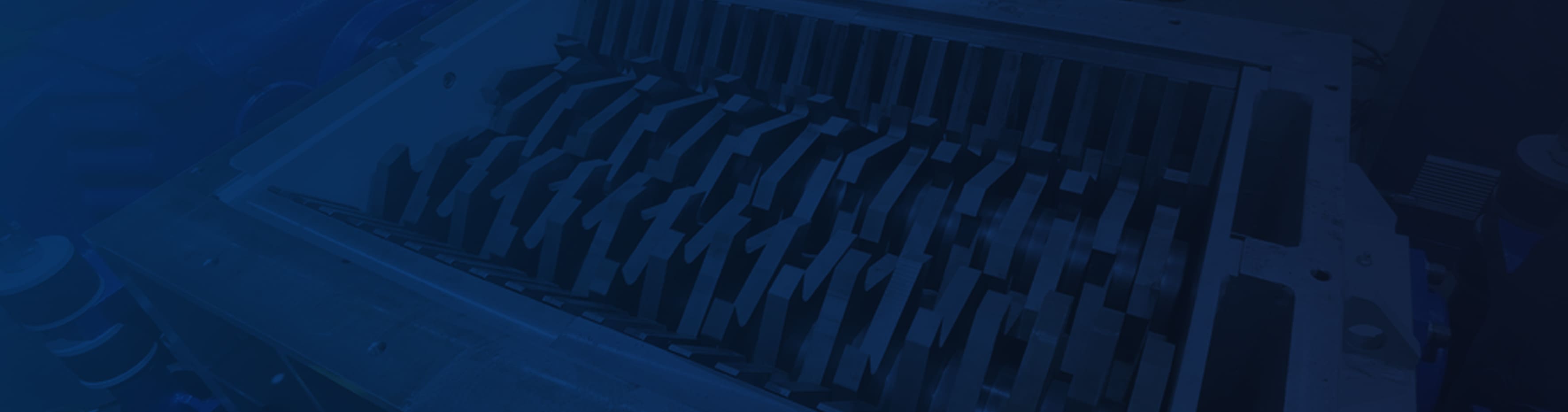
1. Primary shredding: After feeding, large-scale waste is taken to the primary shredder by a chain plate conveyor. This conveyor gives stable, continuous transport. It can handle high loads without slipping. The primary shredder uses shearing and tearing. This reduces waste to fragments measuring less than 300 mm. These fragments are then ready for secondary crushing.
2. Secondary shredding: Material from primary crushing moves to the secondary shredder. Particles are reduced to under 100 mm in size. This improves the efficiency of downstream sorting and resource recovery. Consistent particle size enhances separation based on physical properties. This increases the purity and quality of recovered materials. It prepares them for the subsequent sorting stage.
Sorting
Once shredding is complete, the material moves to a magnetic separator. This separator automatically removes ferrous metals for recycling, such as nails and screws. Next, an air classifier divides the remaining material into light and heavy parts. The light part can be used as refuse-derived fuel (RDF). The heavy part contains valuable materials, such as wood and non-ferrous metals. Wood in the heavy fraction can be separated manually or mechanically. Recovered wood can be used in biomass power plants. It can also serve as a construction material, such as plywood. These steps support resource recycling.
Read More





 IPv6 network supported


